
Picture a quiet weekday morning in a New York off-grid cabin on 5.12 acres. You climb up to the sleeping loft, come back down to a kitchen that opens onto the living space, then step outside with a mug of coffee while the meadow is still damp. I’m imagining this, because I haven’t stood on the land myself.
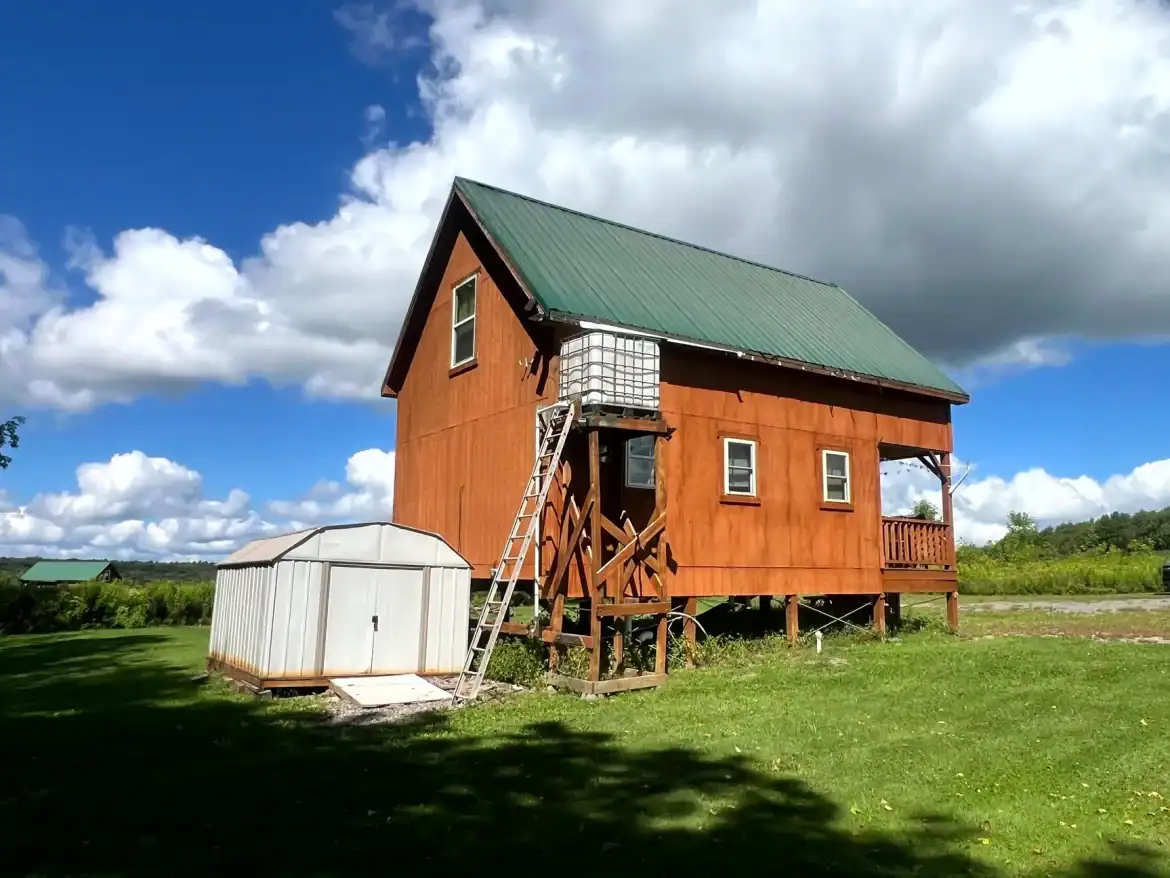
The listed price is $99,900 for a two-story camp of roughly 1,200 square feet in Smyrna, in Chenango County. It borders Beaver Meadow State Forest. The interior is unfinished, so this is a project as much as a place to stay, and I’d plan for that from day one.
What the Numbers Say About This Smyrna Camp
| Listed price | $99,900 |
| Size | About 1,200 square feet over two full floors (20 x 30 ft footprint) |
| Land | 5.12 acres |
| Location | Smyrna, Chenango County, New York |
| Bathroom | Full bathroom with a composting toilet |
| Upstairs | Sleeping loft |
| Interior | Unfinished but fully insulated |
| Heat | Propane |
| Power | Off-grid solar system |
| Water | Rainwater collection system |
| Other building | Separate storage shed |
| Annual taxes | About $1,231 |
Nothing in that table gives a bedroom count, so ask how many people can sleep upstairs before you plan a group trip. Ask about the stair and ceiling height too.
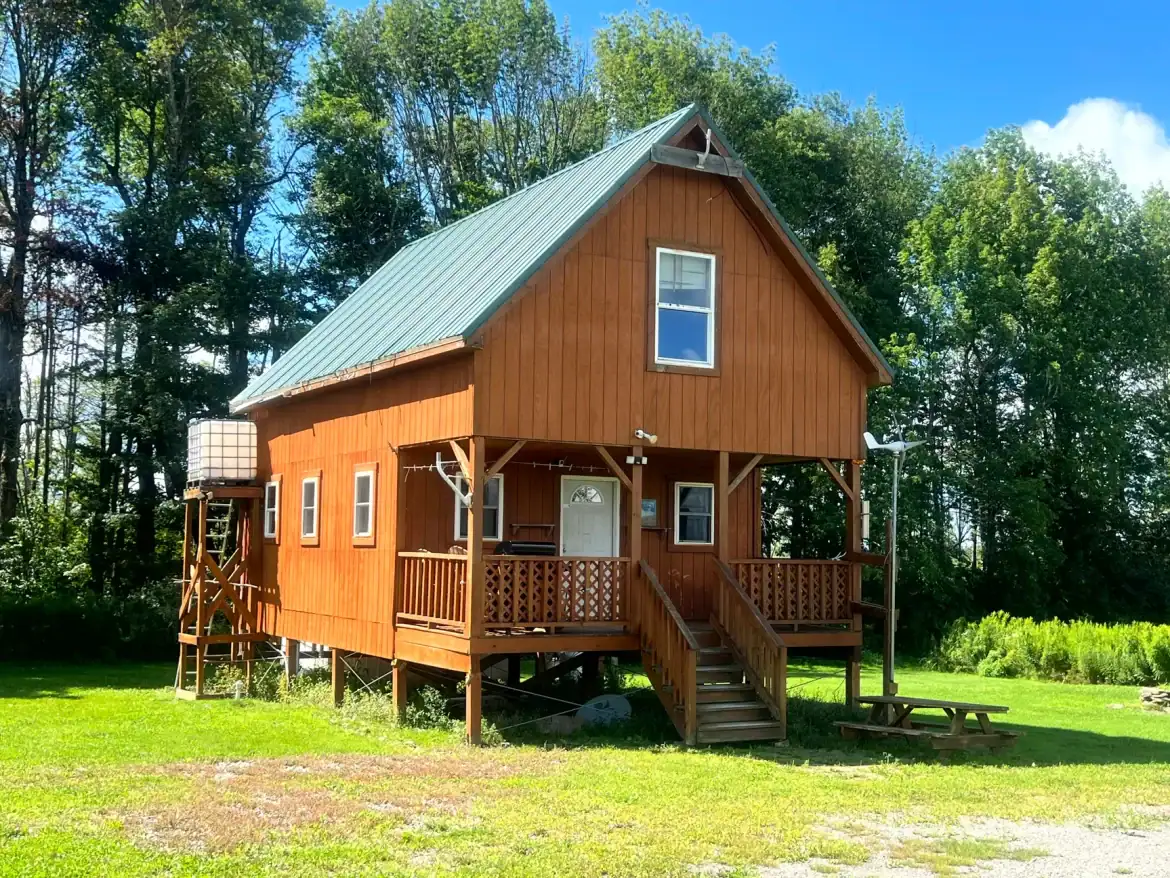
What Works in This Off-Grid Setup
The best part of this camp is that the basics are already in place. You don’t start from zero on power, heat or water.
- Solar power: The off-grid solar system means you aren’t tied to a utility line. Ask what it can run at one time and what backup it has.
- Propane heat: Propane keeps the cabin warm when temperatures drop. Keep the tank filled before the cold arrives, and ask who handles refills.
- Rainwater collection: A rainwater system gives you a water source that doesn’t depend on a well. Ask how much it can store and what you’d do in a dry spell.
- Insulation: The interior is fully insulated, which the seller describes as suited to three seasons. Ask whether it’s meant for winter use.
- State forest frontage: The land borders Beaver Meadow State Forest, so you can reach public land for hunting, hiking and quiet walks without driving.
The 5.12 acres are mostly open meadow with moderate tree cover and gently rolling ground. A mowed lawn surrounds the cabin, which makes a good spot for outdoor cooking or a fire pit. Because the land touches the state forest, you can step from your own ground onto public acreage.
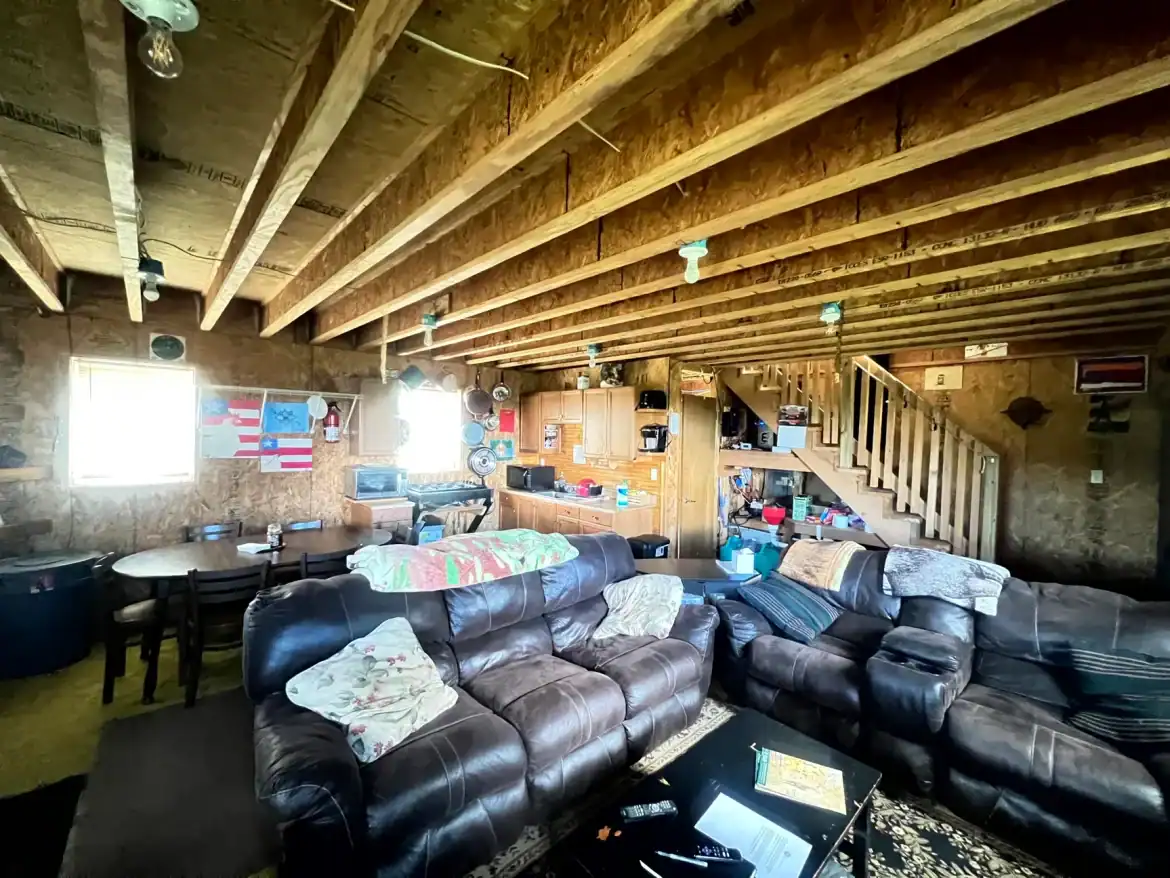
I’ll admit the unfinished interior is what I like most about it as a project. You get to choose the paneling, storage and layout, and that’s a real chance to make the place yours. It’s a lot less appealing if you wanted to unpack and sleep there the first night.
What I’d Question Before You Buy
This is where I’d slow down. Each of these can change how the camp works for you.
- Access: The cabin sits on a gated, seasonal private road. Ask who maintains it, whether the gate is shared and what winter access looks like.
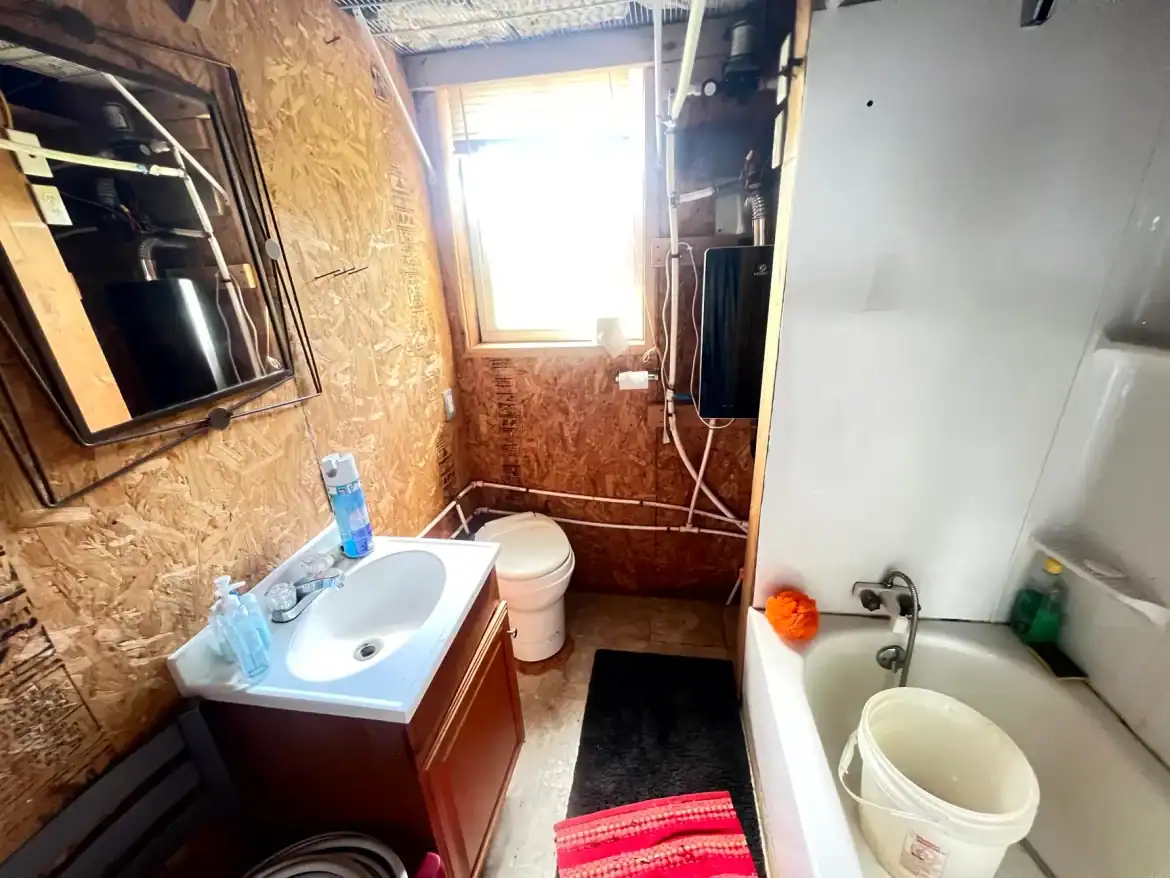
- Composting toilet: These need regular attention and emptying. Ask the seller how the system works and check your local rules before you rely on one.
- Solar capacity: Ask whether the system can handle lights, a refrigerator and power tools at the same time. A camp that runs fine on a quiet weekend can struggle on a busy one.
- Rain-based water: Rain depends on the season. Plan for dry stretches before you count on the system for everything.
- Unfinished interior: Finishing work takes time and money. Ask whether any work has started and which permits your town requires.
Splitting Two Floors Into a Working Camp
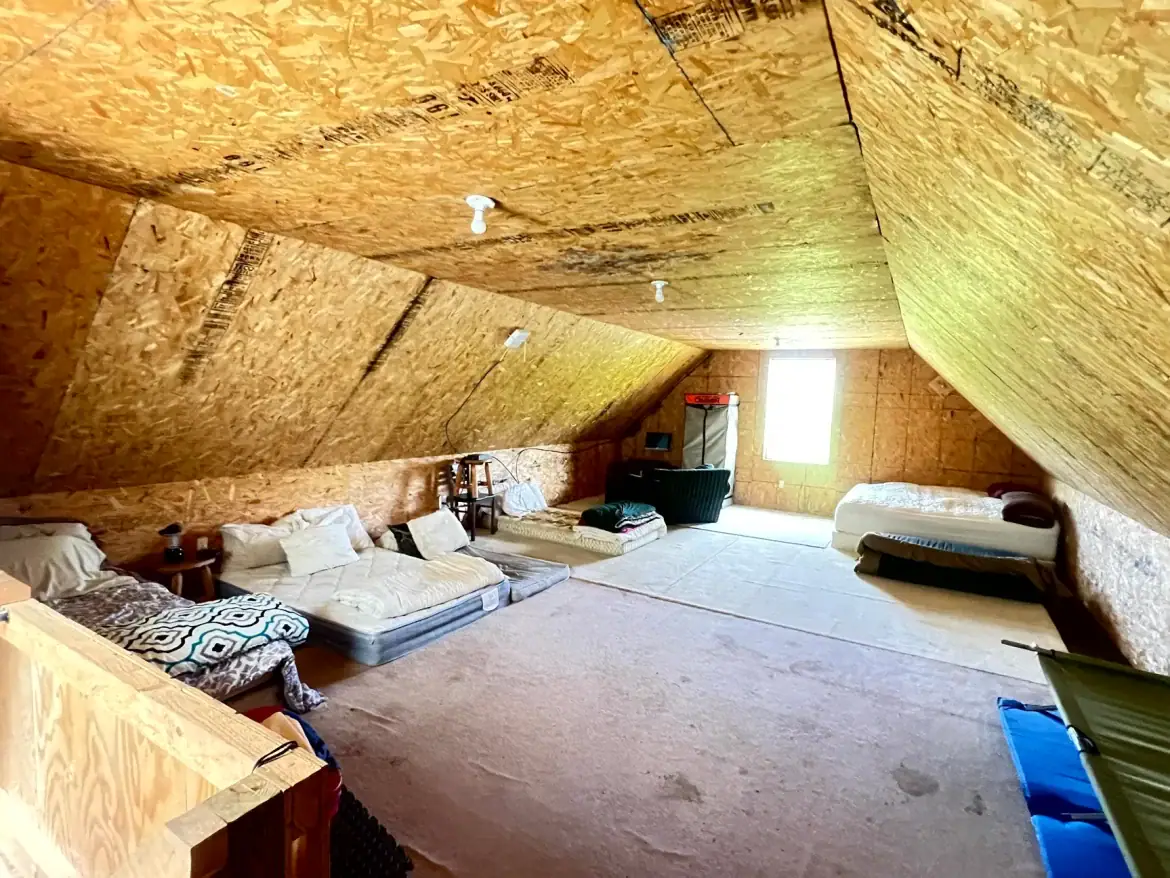
The footprint is 20 by 30 feet, which works out to roughly 600 square feet per floor if the two levels match. Downstairs holds the open living and kitchen area and the full bathroom. Upstairs is the sleeping loft.
Open plans make a small space feel bigger. They also mean cooking smells and conversation carry through the whole room, so plan for that on a busy weekend.
The sleeping loft is the part I’d check hardest. The seller pitches it for hunting groups, family weekends and seasonal trips. That’s a fair goal, but a loft is only as useful as its stairs and headroom, so measure both before you count it as sleeping space.
With one full bathroom, a group of four or more could face a line each morning. That’s worth weighing against the price, especially if you plan regular hunting trips.
What a New York Off-Grid Cabin Costs to Own
The listed price is $99,900 at the time of writing. Prices change, so confirm the number with the seller before you plan around it. Annual taxes are about $1,231, but taxes change too, so check with the county.
The price doesn’t cover the rest. Budget separately for:
- Closing costs: Fees and other costs tied to the purchase. Ask your attorney or title company for an estimate.
- Propane: Tank rental, refills and the cost of heating through the cold months.
- Solar upkeep: Batteries, inverters and repairs, depending on how the system was built.
- Finishing: Walls, flooring, paneling, storage and any electrical or plumbing changes. Get quotes from local contractors rather than guessing.
- Road and gate: Any share of road upkeep or gate costs.
- Insurance: Remote cabins can be priced differently, so ask for a quote early.
- Permits: Check local rules for any finishing work or added structures.
Who This Camp Suits and Who Should Pass
This camp suits a few kinds of buyers:
- Hunters and hikers who want public land close at hand.
- People who enjoy finishing a space themselves and can plan the work over time.
- Buyers who want off-grid systems already installed and are ready to maintain them.
- Anyone who wants a weekend camp within reach of Syracuse or Binghamton and can live with a seasonal road.
It’s a poor fit if you want to move in right away, need several beds and bathrooms, or can’t plan around a seasonal road. Look elsewhere if you need a finished interior at closing. Start with the road and the solar setup, since those decide how the camp works all year. If both check out, you could have a quiet place to return to, and I hope it treats you well.
You may also like
- 16×48 Lofted Cabin at $22,387: Is 768 Sq Ft Enough?
- Mobile Log Cabin Kits: What Star Log Cabins Offers
Source: LandWatch