
Most people who dream about moving to the country hit the same wall sooner or later: the price of a house. Land can be surprisingly cheap once you get far enough from the city, but putting a livable building on it is where budgets fall apart.
That’s why a cabin shell like the 14×36 A-frame from Sheds By Design gets so much attention. At a listed price of around $14,000, it’s one of the more affordable ways to put a real structure on your property and start building the life you want, one weekend at a time.
But a low sticker price only tells part of the story. Let’s look at what you actually get, what you’ll still need to spend, and who this kind of cabin makes sense for.
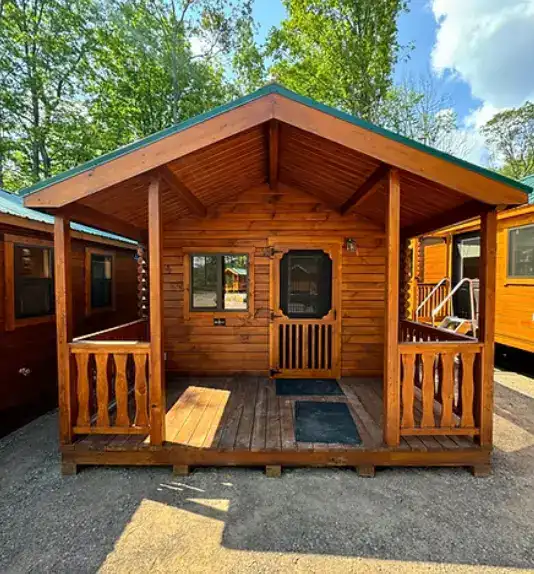
What $14,000 Gets You
This cabin is sold as a shell. That means the outside is done, and the inside is a blank canvas. Think of it as the bones of a home, not a move-in-ready house.
Here’s what the builder lists:
- Size: 14 feet wide by 36 feet long, which works out to about 504 square feet of floor space
- Roof style: A classic A-frame roofline with tall walls
- Framing: 2×4 wall studs
- Siding: LP SmartSide with a 50-year warranty
- Floor: Pressure-treated flooring that can be stained
- Windows: Several windows that let in plenty of natural light
Do the quick math and you’re paying roughly $28 per square foot for the shell. For comparison, finished new homes in the U.S. often cost well over $150 per square foot to build. Even after you add the interior, there’s a real chance to save a lot of money here.
Quick note: Prices, sizes, and options for prefab cabins change often, and listings don’t always match. Before you budget around any number in this article, get a current written quote straight from the builder.
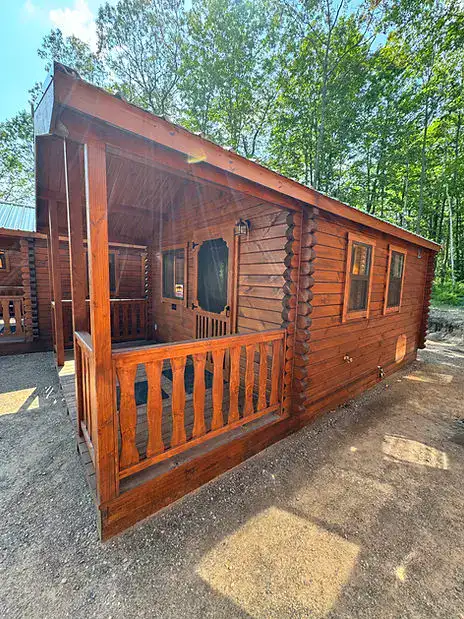
Why the A-Frame Shape Still Works
A-frames have been around for a long time, and there’s a reason they keep coming back.
The steep roof sheds rain and snow easily, which matters a lot if you’re building somewhere with real winters. The tall interior also makes a modest footprint feel more open than it is. Five hundred square feet with a high ceiling feels very different from five hundred square feet under a flat, low one.
And honestly, they just look good. An A-frame sitting at the edge of a tree line or near a pond has a kind of charm that a plain box shed never will. If you ever plan to rent the cabin out, that look can help it stand out online.
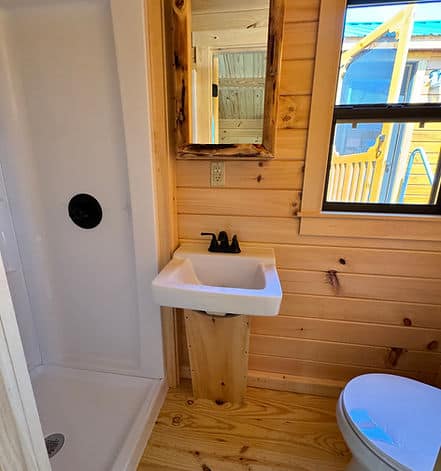
The Part Nobody Likes to Talk About: Finishing Costs
Here’s where I want to be straight with you. The $14,000 is the starting line, not the finish line.
Because the interior comes unfinished, you’ll need to plan for some or all of the following:
- Insulation. A shell isn’t insulated for year-round living out of the box. If you want it warm in January, budget for wall, floor, and roof insulation.
- Interior walls and ceiling. Drywall, plywood, or tongue-and-groove pine are all common choices. Wood paneling fits the cabin feel and is easy for a DIYer to install.
- Electrical. Running power from the road, adding solar, or installing a generator setup can vary wildly in cost depending on how far you are from the grid.
- Water and septic. This is often the biggest hidden expense on rural land. A well and septic system can cost more than the cabin itself, so price this out early.
- Heating and cooling. A small wood stove or a mini-split heat pump is usually enough for a space this size.
- Foundation and site prep. Your land needs to be level and ready for delivery. Gravel pads, piers, or blocks are common options.
- Permits. Rules differ a lot by county. Some places treat a cabin like this as an accessory building, while others require it to meet full residential code if anyone lives in it.
None of this is meant to scare you off. Plenty of people finish shells like this over a year or two, paying as they go and doing much of the work themselves. That’s actually one of the biggest advantages. You’re not taking on a big mortgage. You’re building equity with your own hands.
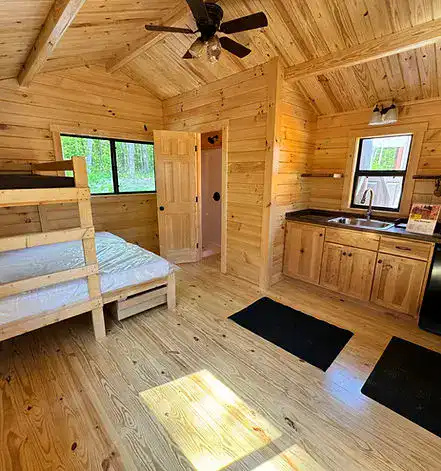
Who Is This Cabin Really For?
A 504-square-foot cabin won’t suit everyone. But it fits a surprising number of situations:
- The weekend escape. If you own land a few hours away, this can be your getaway without the cost of a full second home.
- The remote worker. Put it behind your house and you’ve got a quiet office far from the kitchen table and the TV.
- The guest house. Visiting family gets their own space, and everyone stays a little saner.
- The hobby shop. Woodworking, pottery, painting, music. It’s big enough to spread out.
- The first step toward homesteading. Some people live in a finished shell while they work on a larger house nearby, or decide the small cabin is all they ever needed.
One thing to keep in mind if you’re thinking about living in it full time: check your local zoning first. Some areas have minimum home sizes, and you don’t want to find that out after delivery day.
Tips Before You Order
If this cabin has caught your eye, a few simple steps can save you a lot of trouble later:
- Ask about customization. The builder mentions extra doors and windows as options. Placing windows where you want them is far easier at the factory than cutting holes later.
- Measure your access. A 14-foot-wide building needs a clear, solid path for the delivery truck. Tight turns, soft ground, and low branches can all cause problems.
- Plan your layout early. Even if you won’t finish the inside for months, decide now where the bathroom, kitchen, and sleeping area will go. That affects where plumbing and wiring need to run.
- Get everything in writing. Price, delivery fees, what’s included, and the warranty terms. Verbal promises are easy to forget.
Is a $14K A-Frame Cabin Worth It?
If you’re expecting a finished house for $14,000, you’ll be disappointed. That’s not what this is.
But if you want a solid, good-looking structure that gets you onto your land now, and you’re willing to put in some time and sweat to make it your own, a cabin shell like this is one of the most budget-friendly paths to a rural lifestyle out there.
Rural living rarely starts with everything perfect. It usually starts with a small building, a stretch of land, and a plan you work on a little bit at a time. For a lot of people, a simple A-frame cabin is exactly the right place to begin.
Source: Lake Country Sales and Rentals