
I’ll admit it: I spent more time than I’d like to say looking at small cabins online before I understood what I was looking at. Every listing shows the same golden-hour photo of a cute little building in the woods, smoke curling out of a chimney. What those photos skip is the stuff that decides whether the cabin works for you: how big it really feels, what’s included, and how much more you’ll spend before you can sleep in it.
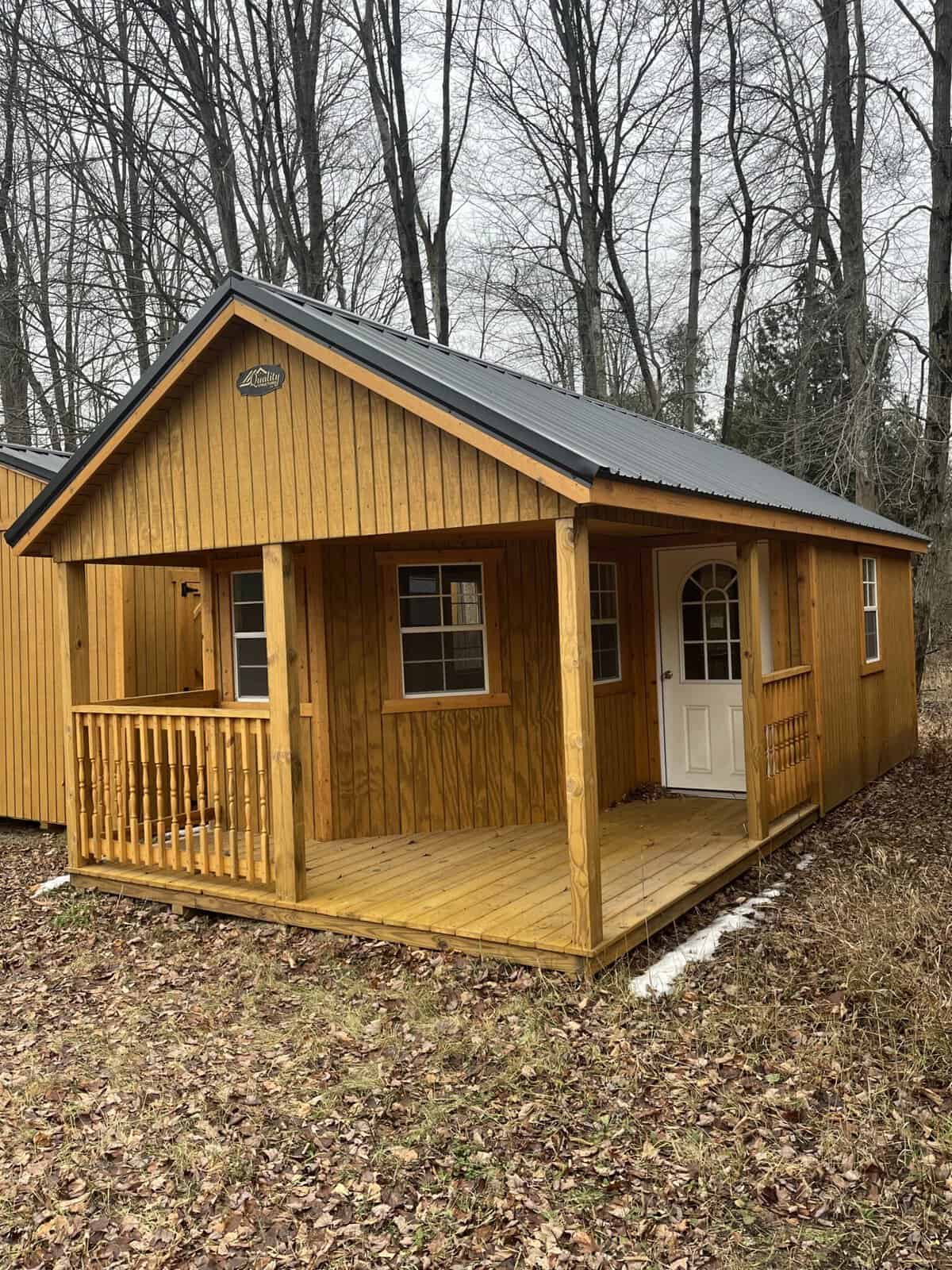
So let’s do that here. We’ll use one popular example, a 12×24 portable cabin like the Deluxe Bayfront from Quality Structures, and walk through what you get, what you don’t, and who this size of cabin suits.
Why 12×24 Is Such a Popular Size
A 12×24 cabin gives you 288 square feet. On paper that sounds tiny. In person it’s about the size of a large bedroom plus a walk-in closet, and with an open layout that’s more room than you’d expect.
The size is a sweet spot for a few reasons:
- It’s small enough to move. Twelve feet wide is about the limit for hauling a finished building on a trailer without a lot of extra hassle, so many builders design around it.
- It’s big enough to live in. You can fit a bed, a small kitchenette, a seating area and a desk without feeling like you’re camping in a closet.
- It often avoids heavier rules. In many areas, buildings under a certain size get lighter permitting. That limit changes a lot from place to place, so check locally (more on that below).
What Comes With a Basic Cabin Kit
Using the Bayfront-style cabin as an example, this is the usual “shell” package for this class of building:
| Feature | What to expect |
|---|---|
| Size | 12′ x 24′ (288 sq ft) |
| Siding | Treated T1-11 panel siding |
| Trim | Treated cedar |
| Roof | Dark/black roofing |
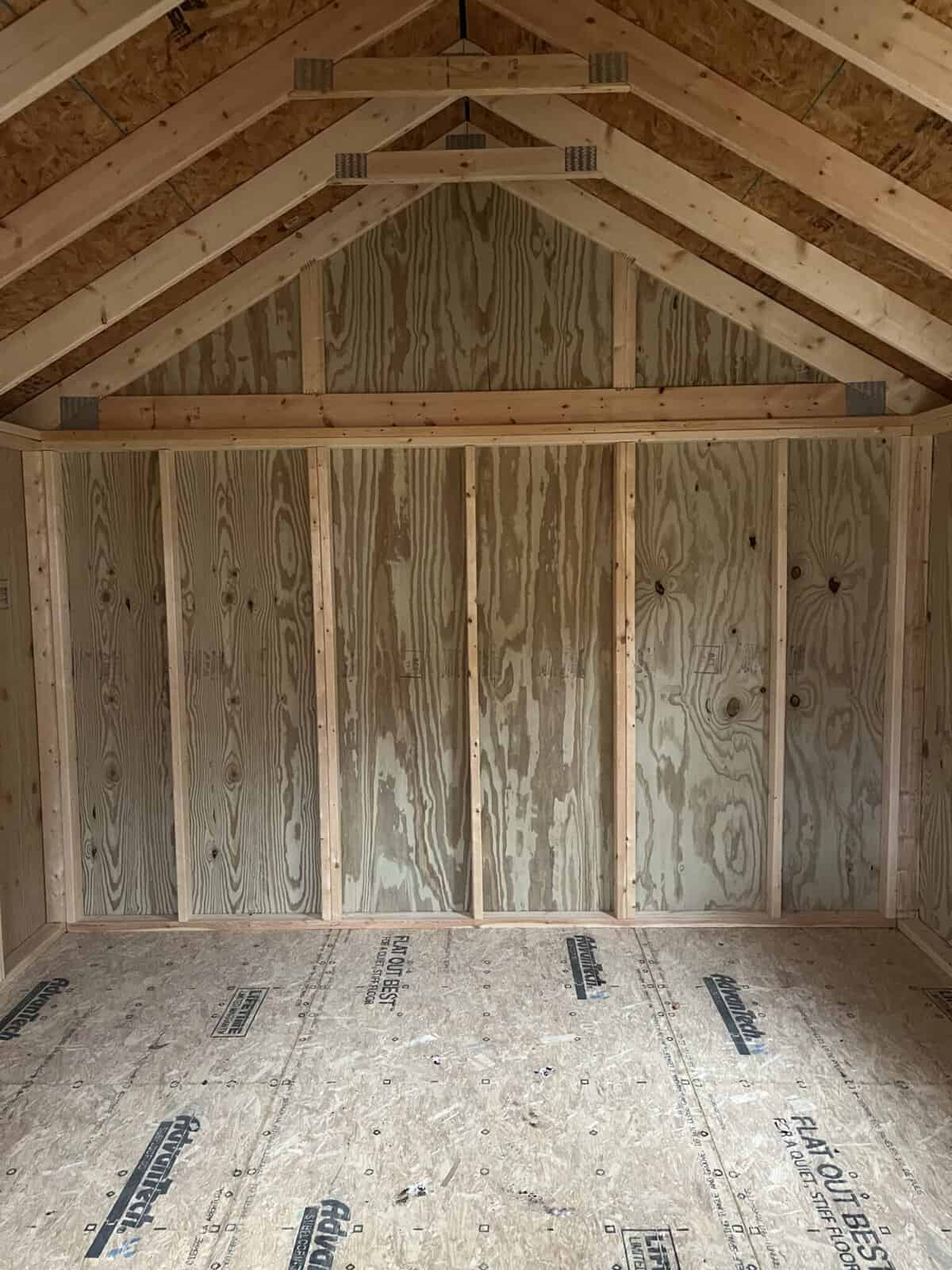
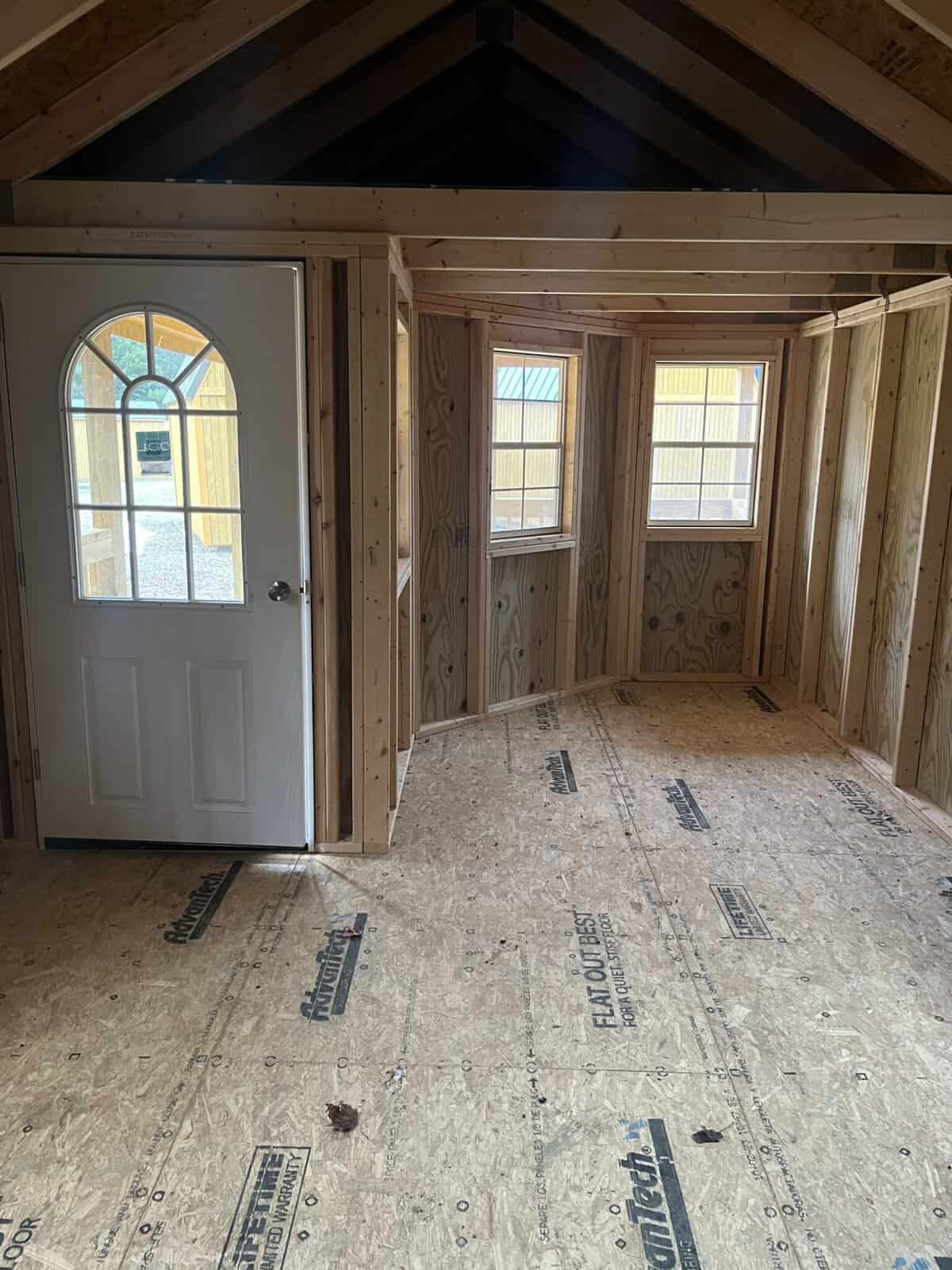
| Interior | Unfinished (bare studs and rafters) |
| Starting price | Roughly $10,250–$10,400 at the time of writing |
Prices change often, so always get a current quote straight from the builder.
The exterior: simple, but built to last
T1-11 siding is common on small cabins and sheds, and for good reason. It’s a grooved plywood panel that looks like vertical boards, goes up fast, and holds up well when it’s treated and kept painted or stained. Pair it with cedar trim and you get that classic, slightly rustic look without the upkeep of a full log build.
The dark roof is mostly about looks, but it also absorbs a bit of sun in winter and sheds snow a little faster. Don’t count on it to heat your cabin, though. Insulation does most of that work.
The interior: a blank canvas, for better and worse
This is the part people misread most often. “Unfinished interior” means you’re getting a shell. Expect exposed framing, no insulation, no wiring, no plumbing and no wall coverings.
Some buyers love that. You can lay it out however you want, use the materials you like, and do the work over time as money allows. Others feel blindsided when they see the bare studs. Just know which camp you’re in before you order.
What It Really Costs to Finish a 12×24 Cabin
This section is the reason I wrote this article, because nobody seems to talk about it. The kit price is where you start, not what you’ll end up spending. These are rough ranges for a do-it-yourself finish. Your costs will depend on where you live and how fancy you go.
- Foundation or site prep: $500–$3,000 (gravel pad, concrete blocks, or piers)
- Insulation: $600–$1,500 (fiberglass batts are cheapest; spray foam costs more)
- Interior walls: $800–$2,500 (pine tongue-and-groove looks great in a cabin; drywall is cheaper)
- Flooring: $400–$1,500 (luxury vinyl plank is a good choice for small spaces)
- Electrical: $1,000–$4,000+ (depends heavily on distance to power and whether you hire an electrician, which you usually should)
- Heating: $300–$3,000 (a small electric heater up to a wood stove or mini-split)
- Windows and doors: check what’s included, since upgrades add up fast
- Plumbing (optional): anywhere from a few hundred dollars for a simple sink setup to $5,000+ for a full bathroom
A basic, comfortable finish often lands somewhere between $5,000 and $15,000 on top of the kit. Even then, a finished small cabin for $15,000–$25,000 is hard to beat compared with almost any other building of its kind.
5 Smart Ways to Use a 12×24 Cabin
1. A backyard home office
This is probably the most popular use right now. Having your workspace a 30-second walk from your kitchen, but behind a separate door, does wonders for focus. A 12×24 gives you room for a real desk, shelves, a reading chair and even a daybed for the occasional nap you didn’t take.
2. A guesthouse for visiting family
Put a queen bed at one end, a small sitting area at the other, and add a mini fridge and coffee maker. Guests get privacy, you keep your house, and everyone stays happier.
3. A weekend getaway on rural land
If you own a few acres of woods or mountain land, a cabin like this turns “someday we’ll build something” into “we’re going this weekend.” Add a wood stove and a small porch and you’ve got a place you’ll keep finding excuses to visit.
4. A fishing or hunting cabin
Near a lake or on hunting land, a simple cabin beats a tent or a cramped camper every time. Keep the inside tough and easy to clean: vinyl floors, a utility sink and hooks for wet gear.
5. A small rental
In areas that allow short-term rentals, a well-finished small cabin can become a nice side income. Guests love cozy, Instagram-friendly spaces, and 288 square feet is plenty for a couple. Just check local zoning and rental rules first.
Pros and Cons at a Glance
Pros
- Low starting price compared with traditional construction
- Fast delivery or assembly
- Flexible layout, since you design the inside
- Low-maintenance exterior materials
- Can be moved in many cases
Cons
- The finished price is much higher than the kit price
- An unfinished interior means real work, or paying someone else to do it
- Limited space for a full bathroom and a kitchen
- Resale value depends on local rules and whether the building counts as permanent
Before You Buy: Don’t Skip These Steps
- Call your local building or zoning office. Ask about size limits, setbacks from property lines, and whether anyone can sleep in it overnight. That last question trips up a lot of people.
- Plan your foundation. Even a portable cabin needs a level, well-drained base. A cheap foundation is the fastest way to end up with sticking doors and a sagging floor.
- Think about utilities early. Running power 200 feet across a yard can cost more than you’d think. If you’re going off-grid, size your solar setup to how you’ll really use the cabin.
- Ask exactly what’s included. Windows, doors, delivery, leveling and any porch can all be extras depending on the builder.
- Budget 20% extra. Every small-build project goes over. Plan for it now so it doesn’t sting later.
Frequently Asked Questions
Can you live full-time in a 12×24 cabin?
Plenty of people do, especially single people or couples who keep things simple. Insulation, a reliable heat source and local approval for full-time living are the big three.
Is a 12×24 cabin good for cold climates?
It can be, as long as you insulate the walls, roof and floor. The floor is the one people forget. A small space is actually easy to heat once it’s sealed up properly.
How long does it take to finish the inside?
A handy DIYer working weekends can usually get a basic finish done in two to four months. Hiring out the electrical speeds things up and is safer.
Does a cabin like this add value to a property?
It often does, especially as an office or guest space. How much depends on your local market and whether the cabin counts as permanent.
The Bottom Line
A 12×24 cabin isn’t a magic $10,000 house. It’s a solid, well-sized shell that gives you a lot of freedom for the money. If you go in knowing you’ll spend more to finish it, and you enjoy the idea of shaping the space yourself, it’s one of the most practical ways to get a getaway, an office or a guest room.
Start with your local rules, set a realistic budget, and picture how you’ll really use the space. Get those three right and a small cabin can turn into one of your favorite places.
Source: Quality Structures – 12×24 Deluxe Bayfront Portable Cabin