
Let’s be honest. When most of us picture owning a log cabin, we picture a price tag with a lot of zeros on it. Timber-frame lodges, custom builders, a lake view you’d need a second mortgage for. So when you see a modular log cabin advertised for under ten thousand dollars, your first reaction is probably the same as mine was: what’s wrong with it?
The short answer is that nothing is wrong with it. It’s just small, simple, and honest about what it is. The longer answer, which is what this article is about, is that the sticker price is only the beginning of the story. If you know where the extra costs hide, a sub-$10K cabin can be one of the smartest ways to get a little piece of the woods without drowning in debt.
Here’s everything I’d want to know before signing anything.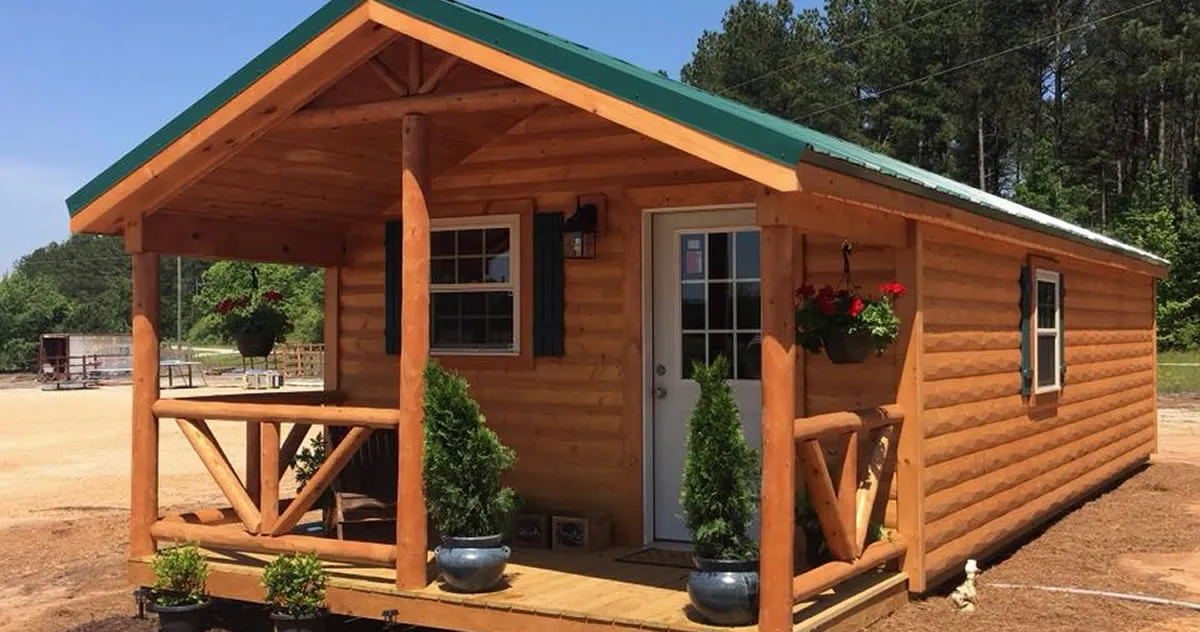
What “Under $10,000” Actually Buys You
The cabins in this price range are almost always around 12 feet by 24 feet, which works out to roughly 288 square feet. For comparison, that’s about the size of a large two-car garage cut in half, or a generous studio apartment without the kitchen.
Most of these are built by small shed and cabin manufacturers (a lot of them are Amish or family-run shops in Pennsylvania, Ohio, and the Midwest), and they’re built as a single shell in a workshop, then trucked to your land.
At the base price, you can usually expect:
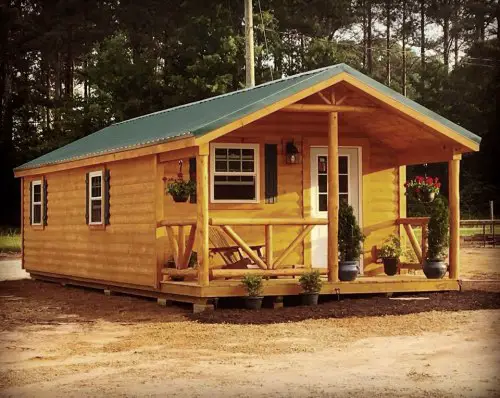
- Real log siding on the exterior, not vinyl pretending to be wood
- A small covered porch, often with log-style railings
- Framed walls using 2×4 or 2×6 studs
- 2×6 floor joists spaced about 16 inches apart, which is a solid, house-like standard
- Tongue-and-groove plywood flooring (usually around 5/8 inch thick)
- Two or three windows and a single entry door
- A metal roof, with asphalt shingles sometimes offered as an upgrade
- A basic manufacturer’s warranty
What you’re not getting at that price matters just as much. The interior is typically bare studs. No insulation in the walls, no drywall or paneling, no wiring, no plumbing, no bathroom, no kitchen. Think of it as a very well-built, very pretty shell. What happens inside is up to you and your budget.
The Costs Nobody Puts in the Headline
This is the part where people get surprised, so I want to lay it out plainly. A cabin that costs $9,500 on the website rarely costs $9,500 by the time you’re sleeping in it.
Delivery
Many builders include free delivery within a certain distance, often somewhere around 50 to 100 miles from their shop. Beyond that, expect to pay by the mile. For a longer haul, delivery alone can run anywhere from $500 to $2,000, and more if your site needs special equipment like a crane or a “mule” to get the building into a tight spot.
Foundation
Your cabin needs something level to sit on. The two most common, budget-friendly options are:
- A compacted gravel pad – the cheapest route, often a few hundred to about $1,500 depending on size and how much ground prep is needed
- Concrete piers or blocks – typically $1,000 to $3,000, and better if your ground isn’t flat or you want airflow underneath
A full concrete slab or a basement is possible, but at that point you’ve left the “budget cabin” conversation behind.
Upgrades
Upgrades are where a cheap cabin quietly becomes a not-so-cheap cabin. Some typical ballpark numbers:
- Extra windows: $200–$500 each
- Bigger or wraparound porch: $500–$1,000+
- Shingle roof instead of metal: $300–$600
- Loft, extra doors, or double doors: varies widely
None of these are bad choices. Extra windows, in particular, make a small space feel twice as big. Just add them up before you fall in love with the configurator.
Making It Livable
If you want to actually live in it, or even spend a comfortable winter weekend, you’ll need to budget for insulation, interior walls, electrical, and possibly water and a composting or septic setup. This is the biggest variable in the whole project. Some people do it themselves for a couple thousand dollars. Others hire contractors and spend far more.
A Realistic Budget Snapshot
| Stage | Rough Total |
|---|---|
| Base cabin shell | $9,000 – $10,000 |
| With a few upgrades + delivery | $10,000 – $12,000 |
| Foundation added | $11,000 – $15,000 |
| Basic move-in ready (DIY-heavy) | $13,000 – $18,000 |
| Fully finished with hired trades | $20,000 and up |
Prices shift with lumber costs, fuel, and region, so treat these as a starting point for your own math, not a quote.
How These Cabins Get From the Shop to Your Land
One of the nicest things about a modular cabin is how little drama there is on install day, as long as your site is ready.
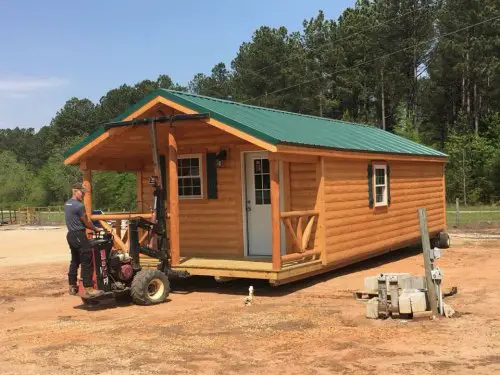
The cabin is built fully (or nearly fully) at the manufacturer’s shop. When it’s done, it’s loaded onto a trailer and driven to your property, usually in one piece for a 12×24. Larger models may arrive in two sections that get joined on site.
On arrival, the driver positions it onto your foundation, sometimes with a tilt-bed trailer, sometimes with a forklift, mule, or crane if access is tricky. The actual setting of the building often takes just a few hours. From the day it leaves the shop to the day you’re standing on your new porch, you’re usually looking at a day or two, not months.
The catch? Access. Before you order, walk the path a truck would take. Low branches, soft ground, steep driveways, and tight turns can all turn an easy delivery into an expensive one. Most builders will ask about this upfront, and it’s worth being brutally honest with them.
Paying for It Without a Traditional Loan
Here’s something that surprises a lot of first-time buyers: many cabin builders and dealers offer rent-to-own programs. These usually don’t require a credit check, and monthly payments on a cabin in this price range often land somewhere around $200 to $300 a month over three to five years.
It’s a genuinely useful option if you don’t want to tie up savings or can’t get a conventional loan for a structure that isn’t a “real” house in the bank’s eyes. That said, read the fine print carefully. Rent-to-own almost always costs more in total than paying cash, and missed payments can mean losing the building and what you’ve already paid. Compare the total cost over the full term, not just the monthly number.
Other options people use include personal loans, home equity lines if you already own property, or simply saving up and paying in cash, which is still the cheapest route by a wide margin.
Who Is a $10K Log Cabin Really For?
I think this is the most important question, because a 288-square-foot shell is perfect for some people and a frustrating mistake for others.
It’s a great fit if you want:
- A weekend getaway on land you already own
- A hunting or fishing cabin that just needs to keep the rain off and hold a couple of bunks
- A backyard office or studio that feels like its own little world
- A guest cabin for visiting family (and a bit of breathing room for you)
- A hobby space, whether that’s pottery, woodworking, painting, or a reading nook
- A small rental on a property where short-term stays are allowed
It’s probably not the right choice if you’re hoping for a full-time family home without a significant amount of extra work and money. Can one or two people live in 288 square feet full time? Absolutely, and plenty do. But it takes planning, and it takes budget beyond that headline number.
If you need more room, the next size up (often around 16×24 or 18×24) tends to start in the low-to-mid teens. Sometimes that jump is worth it, especially if you want a separate sleeping area or a real bathroom.
Before You Order: My Practical Checklist
These are the things I’d sort out before you hand over a single dollar.
1. Check Your Local Rules First
This one gets skipped constantly, and it causes the most heartache. Some counties treat small cabins like sheds and don’t require a permit under a certain size. Others require permits for anything with a floor, a door, or electricity. If you plan to sleep in it, zoning rules about “dwellings” may kick in. A quick call to your county building or zoning office costs nothing and can save you thousands.
2. Prepare the Site Before Delivery Day
Clear the spot, level it, and have your foundation finished and ready. Drivers are on a schedule, and if your site isn’t ready, you may be charged for a return trip.
3. Spend on Upgrades That Make Daily Life Better
If you’re choosing between fancy trim and one more window, pick the window. Natural light, cross-breeze, and a decent porch will do more for how the cabin feels than almost any cosmetic add-on.
4. Leave Wiring and Plumbing to Licensed Pros
DIY insulation and paneling? Go for it. Electrical and plumbing are different. Mistakes there are expensive and sometimes dangerous, and many insurers and inspectors will want to see licensed work.
5. Think About the Seasons
A summer-only cabin can get away with very little. If you want to use it in cold weather, plan for real insulation, a heat source (a small wood stove or mini-split are popular), and proper ventilation to avoid condensation problems.
6. Get Everything in Writing
What’s included, what the warranty covers, the delivery radius, the delivery fee beyond it, the payment terms. Get it on paper. Reputable builders won’t mind.
Frequently Asked Questions
Can you really get a log cabin for under $10,000?
Yes, a small modular log cabin shell in the 12×24 range can come in just under $10,000 from some builders. Just remember that delivery, foundation, and interior finishing are usually extra.
How long does it take to set up a modular log cabin?
Once your site and foundation are ready, delivery and placement often take only a few hours to a day. Finishing the interior is the part that can take weeks, depending on how much you do yourself.
Do I need a permit for a small cabin?
It depends entirely on where you live. Some areas exempt small structures, while others require permits for anything used as living space or connected to utilities. Always check with your local building department before ordering.
Can I live in a 12×24 cabin full time?
Many people do, especially singles and couples who like a minimalist lifestyle. You’ll need to add insulation, electrical, water, and a bathroom solution, and confirm your local zoning allows it as a full-time dwelling.
Is rent-to-own a good idea for a cabin?
It can be, especially if you want to avoid a credit check or keep your savings intact. Just know that the total cost over the full term is usually higher than paying upfront, so compare carefully.
The Bottom Line
A modular log cabin under $10,000 isn’t a gimmick. It’s a real, well-built little structure that can become a weekend escape, a quiet workspace, a guest retreat, or the first step toward a simpler life. The trick is going in with clear eyes. Budget for delivery, the foundation, and whatever it takes to make the inside feel like yours, and you’ll likely land somewhere between $12,000 and $15,000 for a cabin you’ll actually enjoy using.
That’s still a fraction of what most people assume a log cabin costs. And sitting on your own porch with a cup of coffee, looking out at your own trees, is worth every bit of the planning it takes to get there.
Source: Information adapted from Project Small House. For more details, visit Project Small House Modular Log Cabin.