
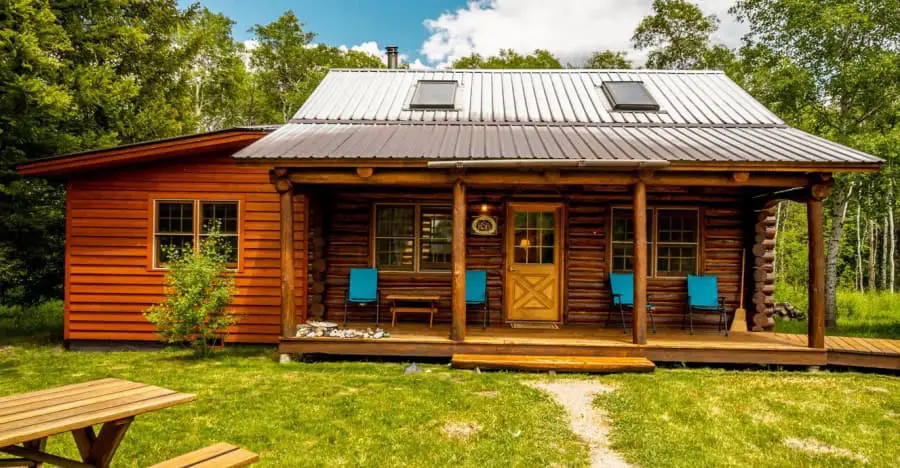
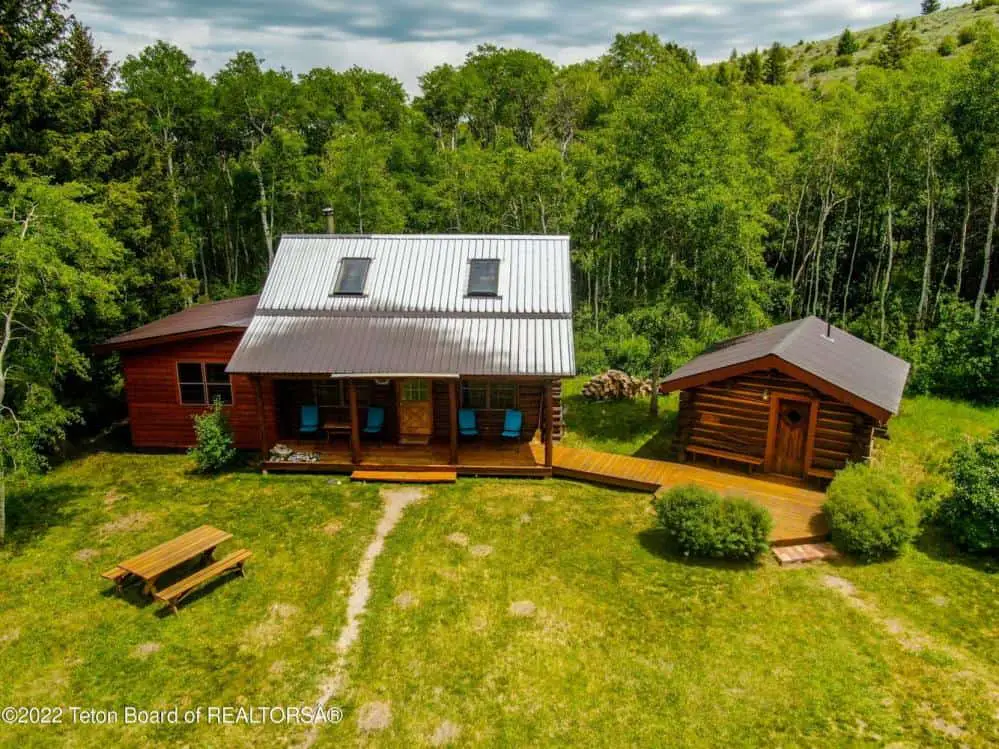
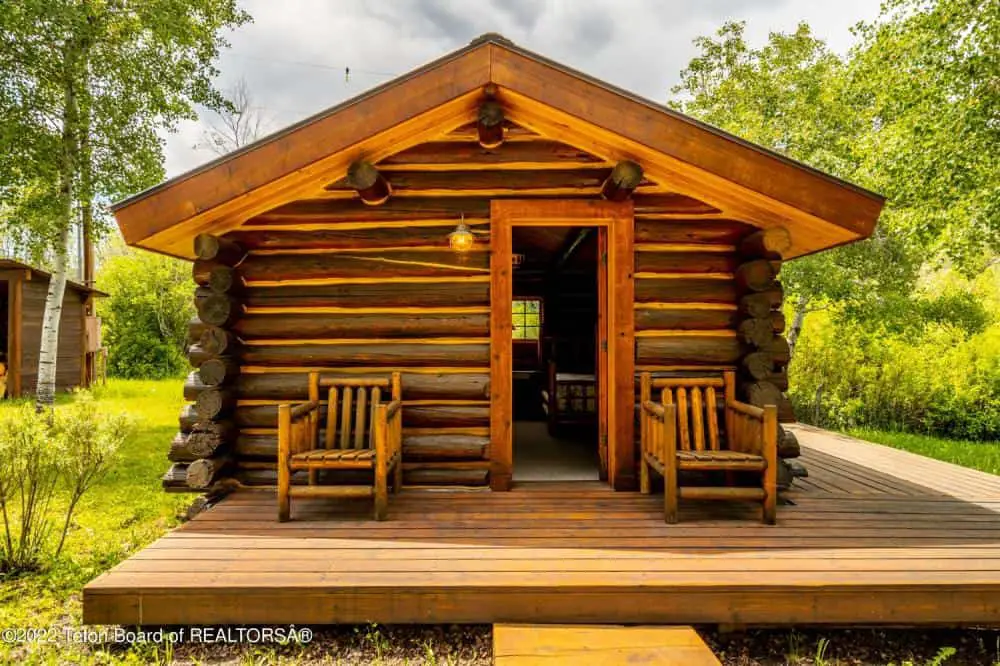
I’ll be blunt: this Driggs Idaho log cabin is more interesting for its land and its cluster of buildings than for the square footage in the headline. A main log home sits beside three one-bedroom cabins, and a fourth cabin works as a self-contained unit. All of it sits on about two acres with a creek running through.
Here’s the honest catch. The description leaves out a price, and it doesn’t say whether the 684 square feet in the headline covers the main home alone or the whole group. Treat what follows as a list of what’s known and what you still need to chase down.
| Location | Driggs, Idaho |
| Land | About two acres at the base of the Big Hole Mountain Range |
| Headline size | 684 square feet, with the buildings it covers not stated |
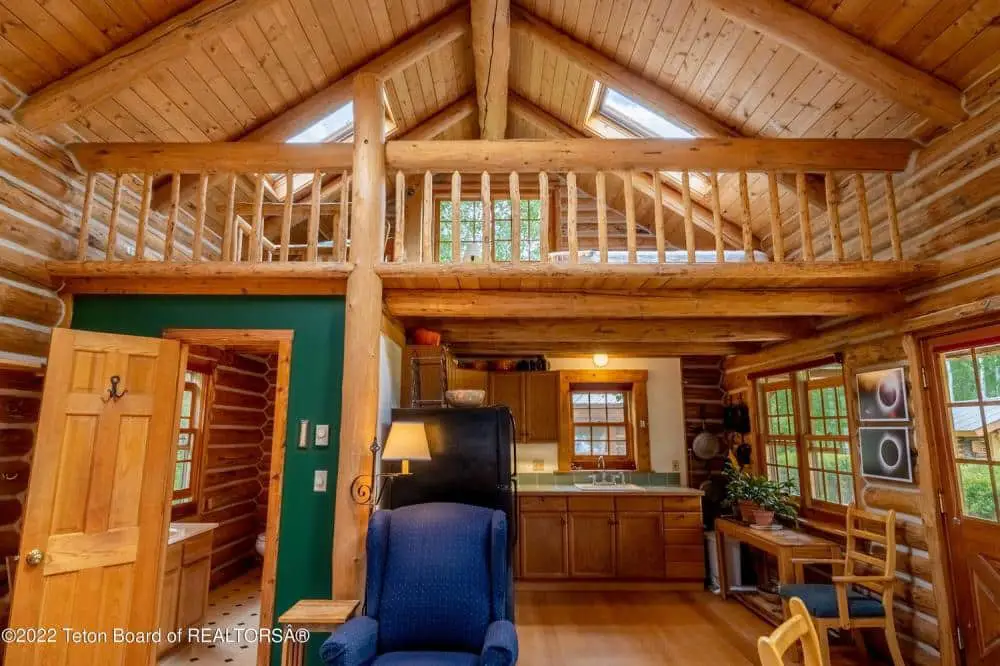
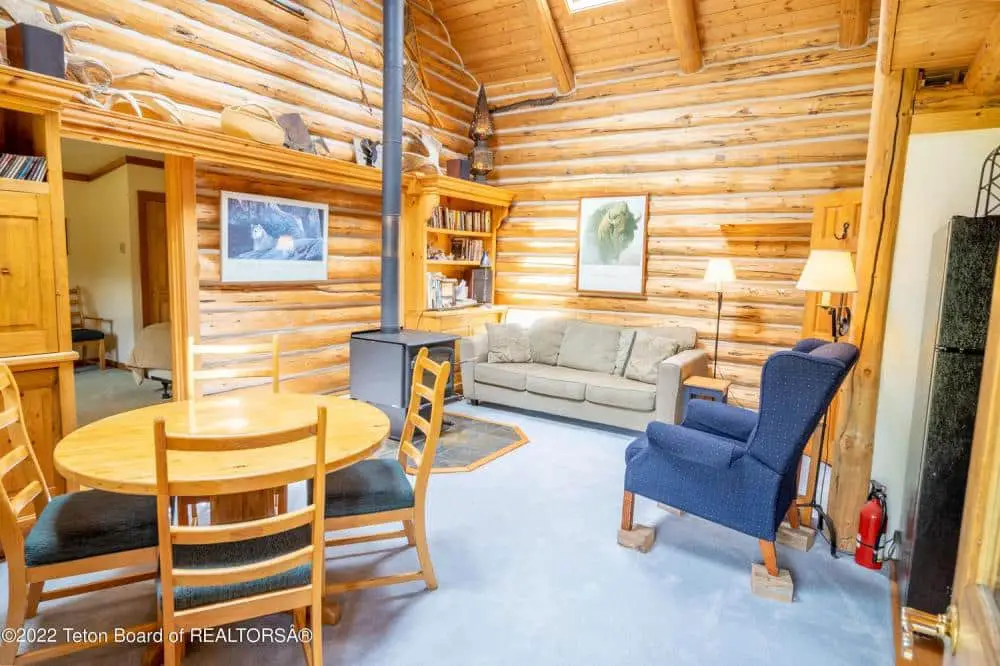
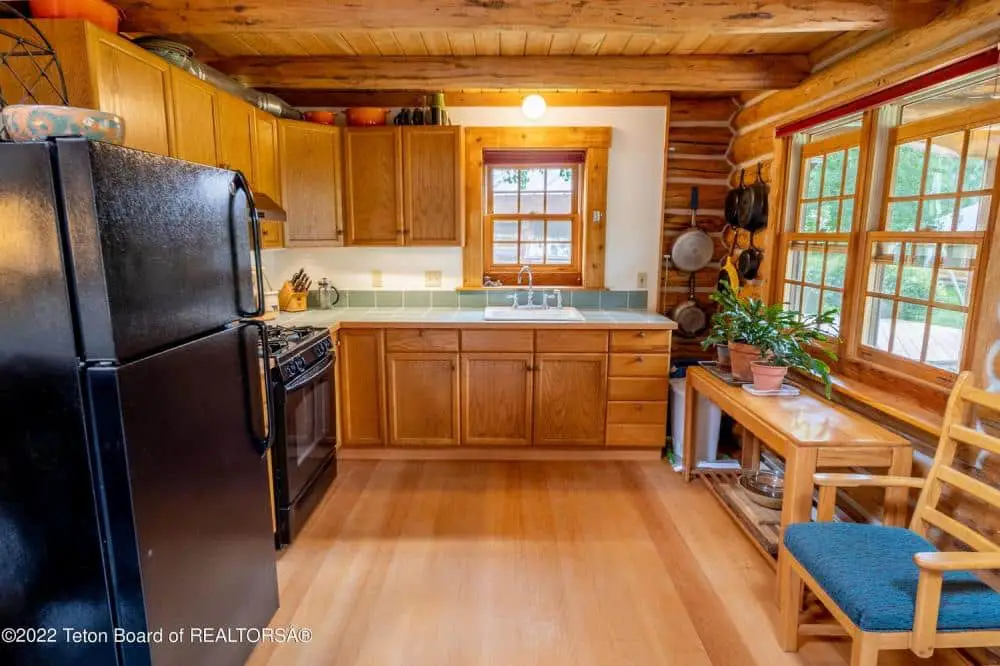
| Main log home | One bedroom, fully equipped kitchen, three-quarter bathroom, loft |
| Adjacent cabins | Three log cabins with one bedroom each |
| Fourth cabin | Self-contained, with kitchenette, three-quarter bathroom, laundry and a bedroom |
| Water feature | Horseshoe Creek flows through the land |
Asking Price and What to Budget Beyond It
No price appears in the description I was given, so I can’t name one. Compass is named for more details, so ask them for the current figure. Confirm whether it covers the land, all five buildings and anything inside them. Prices change, so get the number in writing before you plan around it.
Beyond the sale price, these costs depend on your situation and local rules:
- Property taxes and insurance: Ask your insurer how they price several log buildings on one parcel.
- Utilities and connections: Find out how each building gets power, water, heat and sewer or septic service.
- Road access: Plowing and upkeep for a mountain road can cost real money in winter.
- Log upkeep: Log walls usually need periodic sealing and checks for gaps, moisture and pests.
- Furnishing and repairs: Budget for furniture, appliances and any work the buildings need.
What the Money Would Buy on These Two Acres
By the description, the group adds up to five bedrooms. There’s one in the main home, one in each of the three adjacent cabins and one in the fourth cabin. That’s a lot of sleeping space on a small footprint, and it’s the real selling point of this setup. Bathrooms are thinner, since the description mentions a three-quarter bath only in the main home and the fourth cabin.
A group of small buildings means more to clean, heat and maintain than one house of the same total size. I’d want a clear plan for who uses each building before deciding anything.
The Main Log Home and Its Loft
The main log home has one bedroom, a fully equipped kitchen, a three-quarter bathroom and a loft. The headline calls it a roomy master suite, but the description lists only one bedroom. Ask whether that bedroom has its own bath and closet space, because that’s what most buyers mean by a master suite.
Lofts work well for a bed, storage or a reading nook, but they come with trade-offs. Check the stair or ladder, the headroom and how much of the floor is open to the room below. If older guests or kids will use it, look at the stairs first.
The Driggs Creek Setting Is the Standout
Horseshoe Creek flows through the two acres, at the base of the Big Hole Mountain Range. I’d remember this more than the room count. A creek on your land changes daily life, and it raises questions about flood risk and where the bank sits.
Driggs is a short drive away. The description puts downtown about 12 minutes off, Grand Targhee Resort about 30 minutes and Jackson Hole about 50. Yellowstone and Grand Teton national parks are also nearby. It doesn’t give drive times to the parks, so ask.
In summer, the seller points to floating the Teton River, with a downtown outfitter that supplies gear and carries it for you. Winter brings Grand Targhee’s snow and a chairlift to views from Fred’s Mountain. The resort also has bike trails and cross-country routes in warmer months. Driggs holds a farmers market and art fair every Friday morning.
Who a Driggs Log Cabin Like This Suits
This Driggs Idaho log cabin suits a buyer who wants several buildings on one rural lot and who likes being near outdoor activity. It could work for a family that wants separate sleeping space. It could also suit someone planning a private base with a few guest cabins, if local rules allow that.
- People who want several sleeping spaces on one parcel.
- Anyone who enjoys rivers, creeks and winter sports nearby.
- Buyers who are comfortable with log upkeep and maintaining more than one building.
Look elsewhere if you want one modern home with a full master suite and easy year-round access. The description also says little about nearby stores or services, so check those distances yourself. My verdict: it’s worth a serious look if the price is right and the buildings check out. I wouldn’t commit until the questions below have clear answers.
Three Questions Buyers Ask About a Driggs Log Cabin
Can the cabins work as one family base?
The description says the three cabins sit beside the main home, and the fourth is self-contained. That layout suits a family that wants separate rooms. How the buildings can be used depends on local rules and the condition of each one, so ask Compass for both.
Is a creek property hard to reach in winter?
The description doesn’t say how the road is maintained, so don’t assume it’s easy. Ask who plows the access road, how often, and whether the driveway stays open all year. Mountain lots can be fine in winter, but confirm it.
Do log buildings need more upkeep than a standard house?
In general, yes. Log walls usually need periodic sealing, gap checks and attention to moisture and pests. Ask when each building was last treated and whether any have had repairs. This varies by build and climate, so a local inspector is worth the fee.
What to Ask Compass Before You Decide
- What is the current price, and what does it include?
- Which buildings does the 684 square feet cover?
- Does the main bedroom have its own bathroom?
- How is each building heated, and where does its water come from?
- How is the road maintained in winter?
- What are the local rules for using several buildings on one parcel?
- How close is the creek to the buildings, and is there any flood history?
- When were the buildings built, and what repairs have been done?
You may also like
Source: Compass